
IISER Develops AI Model to Predict Bhojtal Lake's Future Water Levels
Researchers at IISER Bhopal and MANIT developed an AI model to predict Upper Lake's changes under climate scenarios. This model highlights the potential for a 40% reduction in water levels with a 2°C temperature rise, impacting over 1.8 million residents' water security.
 Theia Market Signal Identification - AI Assisted
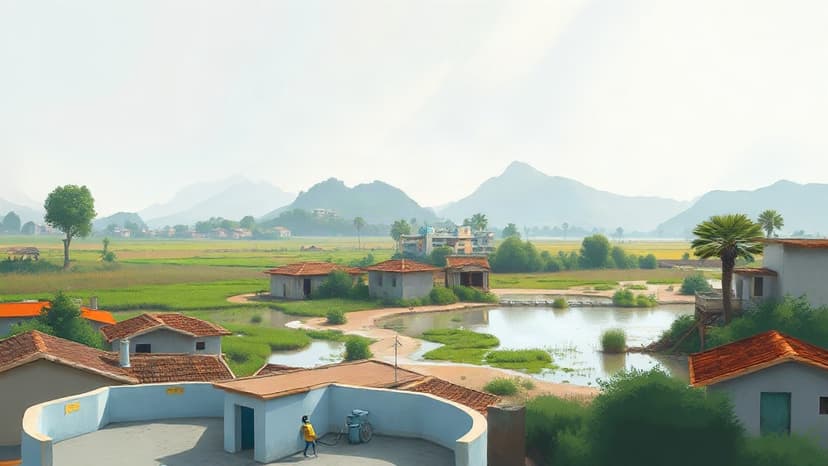
The Indian Institutes of Science Education and Research (IISER) Bhopal and Maulana Azad National Institute of Technology (MANIT) developed an AI model over 15 months to predict changes in Bhojtal Lake due to climate change. If global temperatures increase by 2°C, the lake could shrink by 40% during dry spells.
The model integrates rainfall, temperature, evaporation, and soil moisture data, achieving approximately 90% accuracy in predictions. Current issues include pollution, with 1,480 to 2,050 microplastic particles per cubic meter and a daily sewage inflow of 44 million liters. The research aims to help policymakers improve conservation efforts, especially as urban development around the lake increases.

Comments