
India Invests in Renewable, Nuclear, and Oil Sectors to Meet Energy Demand and Achieve Net Zero by 2070
India is investing heavily in renewable and nuclear energy, alongside expanding its oil production, to meet the rising energy demands of its population and achieve a net-zero target by 2070. With energy consumption surging by 20% since 2019, the country aims for 50% of its electricity capacity to come from non-fossil sources by 2030, while also increasing solar and hydroelectric capacity significantly. Additionally, India plans to enhance domestic oil production to address a projected increase in global demand, focusing on cleaner extraction methods to reduce emissions.
 Theia Market Signal Identification - AI Assisted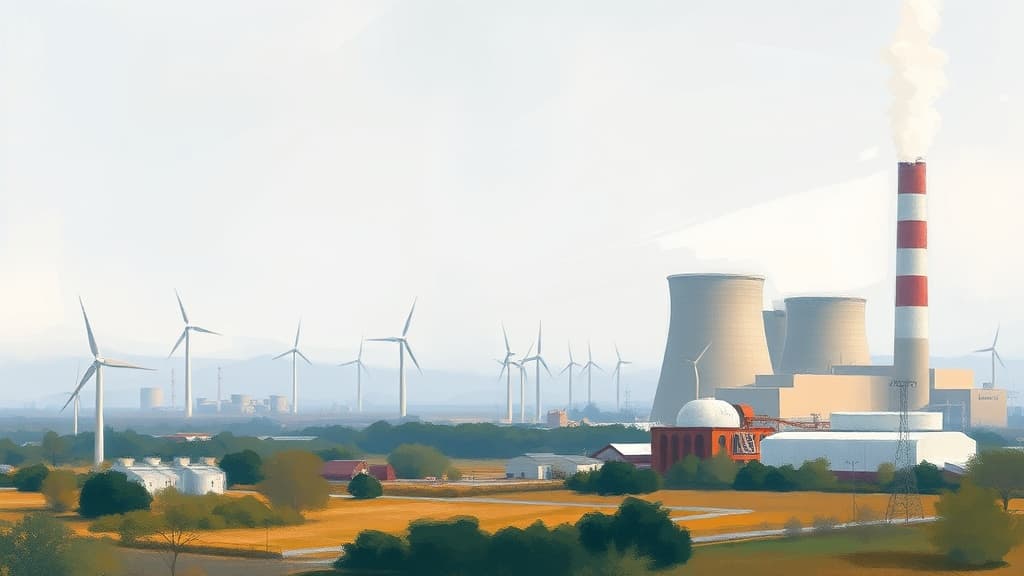
India is significantly investing in renewable and nuclear energy while also expanding its oil production and refining capacity to address its growing energy needs. With a 'Net Zero' target set for 2070 and a goal for 50% of installed electricity capacity from non-fossil sources by 2030, India faces a dual challenge of ensuring energy security for its 1.5 billion people.
Energy consumption has surged by 20% since 2019, reaching 36.2 quadrillion BTU, making India the third-largest energy consumer globally. The country aims to increase its solar capacity to over 100 gigawatts and hydroelectric capacity to 67 gigawatts by 2032.
Concurrently, India plans to boost domestic oil production to meet a projected one-third of global oil demand increase by 2030, reforming regulations to attract international investment. The focus on cleaner extraction methods and advanced technologies is also critical to reducing emissions, particularly methane.



Comments