
India's Steel Sector Aims for Low-Carbon Transition Amid Growth Plans
India's steel sector, the world's second-largest, aims to increase production capacity from over 152 million tonnes in FY25 to 300 million tonnes by 2030 and 500 million tonnes by 2047. To address its significant carbon emissions, which contribute 10-12% of India's total, the Ministry of Steel has launched a Low-Carbon Transition Task Force and a Green Steel Taxonomy, targeting a reduction in emissions intensity from 2.54 tCO₂ to 2.2 tCO₂ per tonne of crude steel by 2030. The sector faces challenges such as reliance on coal-fired power and the need for quality scrap, highlighting the importance of policy support for sustainable growth.
 Theia Market Signal Identification - AI Assisted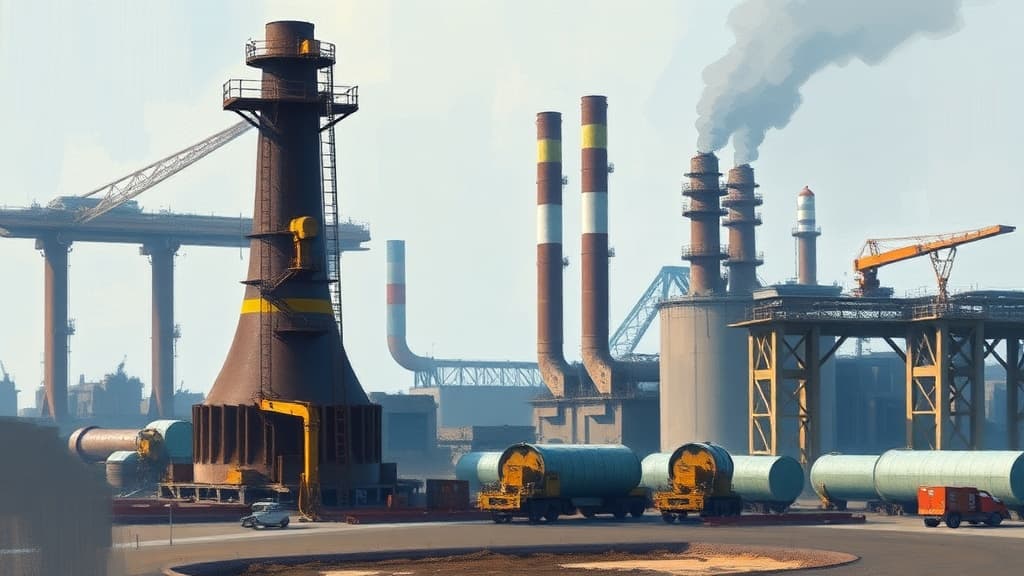
India's steel industry, the second-largest globally, produced over 152 million tonnes of crude steel in FY25 and aims to expand capacity to 300 million tonnes by 2030 and 500 million tonnes by 2047. However, the sector must address its carbon emissions, which account for 10-12% of India's total emissions, with an average intensity of 2.54 tCO₂ per tonne of crude steel.
With plans to reduce this to 2.2 tCO₂ by 2030, total emissions could reach 561 million tCO₂ by 2030 and nearly 935 million tCO₂ by 2047. The Ministry of Steel has initiated a Low-Carbon Transition Task Force and introduced a Green Steel Taxonomy to encourage emissions reductions.
Key technologies include hydrogen-based Direct Reduced Iron and Electric Arc Furnaces. Challenges include the availability of quality scrap and reliance on coal-fired power. Policy support is crucial for aligning growth with sustainability goals.



Comments