
Japan's 2040 Energy Plan Focuses on Renewables, Nuclear, and Hydrogen for Decarbonization
Japan's 2040 energy plan aims to enhance energy security and support industrial growth by prioritizing renewable energy as the primary electricity source, increasing energy self-sufficiency to 30-40%. The strategy includes a balanced mix of renewables, nuclear power, and liquefied natural gas, with ambitious targets for offshore wind capacity and hydrogen consumption. The plan seeks to achieve a 60% reduction in emissions by 2035 and 73% by 2040 compared to 2013 levels.
 Theia Market Signal Identification - AI Assisted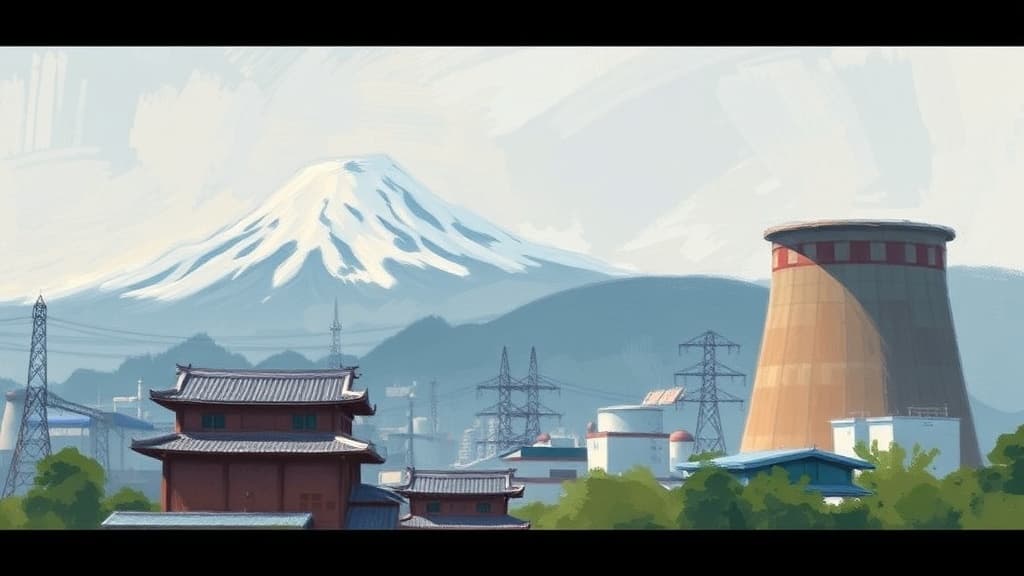
Japan's 2040 energy plan, the seventh strategic energy plan, aims to enhance energy security, reduce emissions, and support industrial growth. It sets a first-time goal to maximize renewable energy as the primary electricity source, increasing energy self-sufficiency from 15.2% to 30-40%.
The strategy includes a balanced mix of renewables, nuclear power rising from 8.5% to about 20%, and liquefied natural gas (LNG) maintaining a significant role. Offshore wind capacity is targeted at 10 GW by 2030 and 30-45 GW by 2040.
The plan aims for 3 million tons of hydrogen consumption by 2030, increasing to 12 million by 2040, supported by a budget of 3 trillion yen for hydrogen initiatives. Key measures include integrating synthetic methane into gas distribution and achieving low-carbon fuel mixes. The GX2040 Vision aims for decarbonization alongside economic growth, with ambitious emission reduction targets of 60% by 2035 and 73% by 2040 compared to 2013 levels.
Comments