
Namibia's $10 billion green hydrogen project advances with Chinese partnership
In southern Africa, one of the world's most ambitious green hydrogen ventures is gaining momentum. Namibia's Hyphen Hydrogen Energy has signed on a Chinese engineering giant to build its $10 billion, 3 GW green hydrogen-ammonia project. The deal cements China's role in Africa's clean energy development and brings Namibia a step closer to becoming a global green fuel exporter.
 Theia Market Signal Identification - AI Assisted
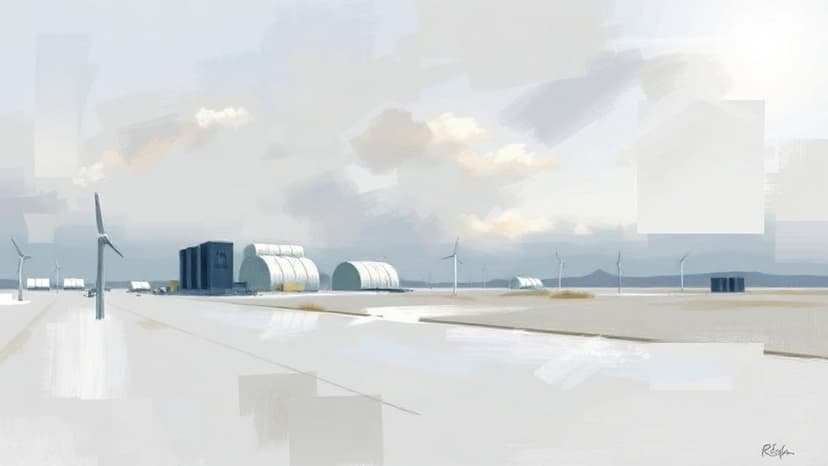
A windswept stretch of Namibian desert on the Atlantic coast could soon host a megaproject straight out of a futurist's playbook: vast fields of solar panels and wind turbines powering electrolyzers to split water into green hydrogen, which will then be synthesized into ammonia for export. This month, Namibia's flagship green hydrogen developer – Hyphen Hydrogen Energy – secured a major execution partner to turn this vision into reality.
China National Chemical Engineering Group's No.7 Construction Company (CC7) has signed on to perform the front-end engineering design (FEED) and, crucially, the engineering, procurement and construction of the planned 3 GW renewable hydrogen project[85][86]. The agreement, inked in Windhoek with Chinese and Namibian officials looking on, effectively green-lights the build-out of what is touted as the world's largest green hydrogen and ammonia production facility.
The numbers behind the project are staggering. With an estimated cost of $10 billion (nearly equal to Namibia's annual GDP), the development will deploy about 3 gigawatts of wind and solar generation in Namibia's sparsely populated Tsau ǁKhaeb National Park, leveraging some of the world's best renewable resources.
This will power electrolyzers to produce roughly 300,000 tonnes of green hydrogen per year, which will be converted into 2.4 million tonnes of green ammonia annually[85][54]. Those volumes would make Namibia – a country of 2.5 million people – one of the top exporters of green ammonia, a carbon-free fertilizer and fuel, by the late 2020s.
Hyphen plans to ship the ammonia to markets in Europe and Asia hungry for clean energy inputs. The Namibian government, which views green hydrogen as a "core pillar" of its economic future, holds a 24% stake in the Hyphen project (a partnership with German renewable firm Enertrag and UK-based investor Nicholas Holdings)[55]. Officials expect the project to create thousands of jobs and eventually boost Namibia's GDP by a significant margin.
For China, the deal is a strategic win as well. By taking on the construction of Namibia's hydrogen hub, Chinese industry gains a showcase project aligning with the Belt and Road Initiative's push into sustainable infrastructure[87].
CC7 – a subsidiary of the state-owned China National Chemical Engineering Co. – brings extensive experience in large-scale petrochemical and energy projects. "Together with Hyphen, the two sides will… promote the smooth implementation of this benchmark renewable energy project," said CC7 Chairman Long Hai at the signing[88].
The Chinese firm's involvement also often eases financing, as Chinese banks may be more willing to back a project built by one of their own. Hyphen's CEO Marco Raffinetti called the project "of great importance" to Namibia's future, emphasizing that it will position the country as a regional green energy hub and generate significant export revenues[55].
The journey hasn't been without skepticism. Some observers wondered if a developing country like Namibia could pull off such a complex, capital-intensive project. But Namibia has moved methodically: conducting feasibility studies, securing initial funding commitments (over N$2 billion, roughly $130 million, in early-stage investments)[89][90], and courting partners from Europe, the US, and Asia.
The European Investment Bank, for instance, has been in talks to provide a €500 million concessional loan to support Namibia's green hydrogen strategy[91]. Now, with a heavyweight contractor on board, ground-breaking on production sites and infrastructure could commence in 2025, aiming for first output around 2027.
The broader context is Africa's emergence in the green hydrogen arena. Several African nations – Egypt, Mauritania, South Africa – are pursuing green hydrogen projects, seeking to capitalize on their renewable resources and land availability.
Namibia, with its stable governance and clear vision, has been a first mover. Should Hyphen's venture succeed, it could transform Namibia from a net importer of fossil fuels into a clean fuels exporter, supplying ammonia for European power plants or Asian fertilizer producers looking to cut carbon footprints.
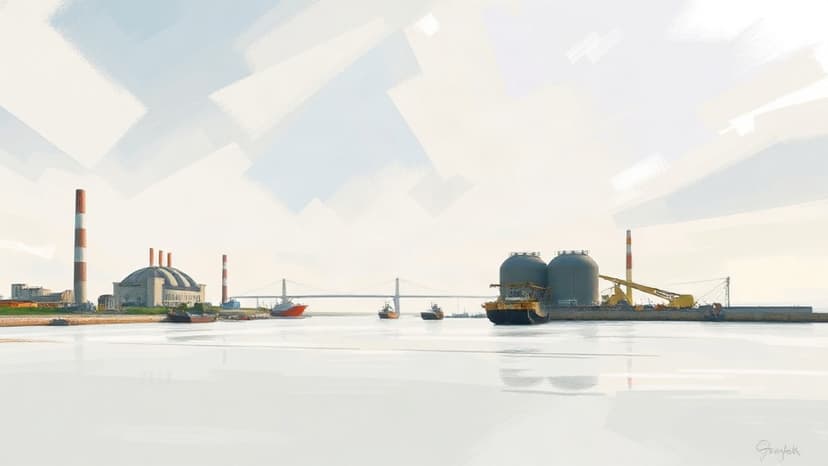
Challenges remain, notably the need for port upgrades to handle ammonia exports and the development of safety and environmental frameworks for such a new industry. But optimism is high. As Namibia's government likes to point out, the world's drive to decarbonize could unlock unparalleled opportunities for countries that ten years ago were on the margins of the energy map. With sun, wind, and now a strong partner via China, Namibia is betting big on a green hydrogen future – and the bet is getting ever closer to paying off[85][55].
Comments