
NASA's Space Launch System: A Powerful Gateway to Deep Space Exploration
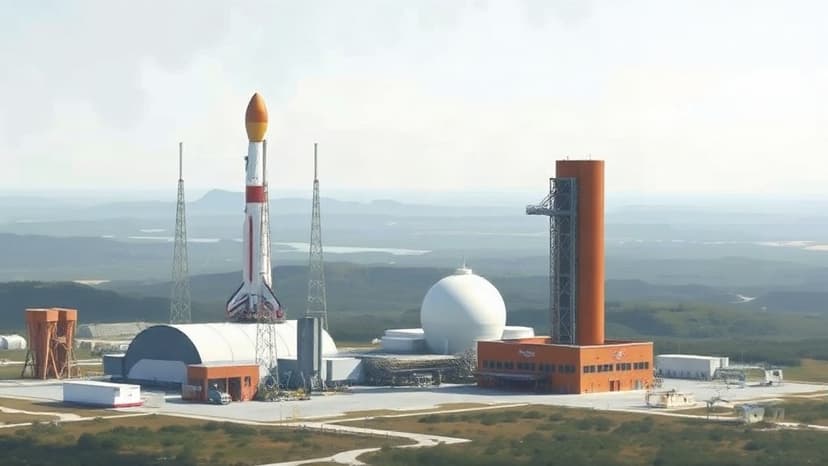
NASA's Space Launch System (SLS), officially launched in 2011, is the most powerful rocket ever built, designed to transport the Orion spacecraft and vital cargo beyond Earth's orbit. Standing at 118 meters tall, it boasts a launch thrust of 8.8 million pounds and can carry significant payloads, making it integral to NASA's Artemis program and future missions to the Moon and Mars.
 Theia Market Signal Identification - AI Assisted
NASA’s Space Launch System (SLS) represents a monumental leap in space exploration technology, officially commencing its journey in 2011. As the only rocket capable of sending the Orion spacecraft and essential cargo beyond Earth's orbit, the SLS stands as a beacon of modern engineering prowess.
Towering at 118 meters (387 feet), it surpasses even the Statue of Liberty, showcasing its sheer scale. This impressive height facilitates the efficient transport of astronauts and equipment on deep space missions, all in a single launch.
The SLS generates a staggering launch thrust of 8.8 million pounds, a force that exceeds that of dozens of jumbo jets combined. This immense power is crucial for escaping Earth’s gravity and making the journey to the Moon more efficient. The rocket’s various configurations, including Block 1 and Block 2, can carry between 95 and 130 metric tons to low Earth orbit, enabling the transport of lunar landers, satellites, and essential cargo in one mission.
At the heart of the SLS is its core stage, powered by four RS-25 engines fueled by a combination of liquid hydrogen and oxygen. This design reflects a sophisticated evolution of the space shuttle technology, enhanced to maximize efficiency. Additionally, the rocket is equipped with two five-segment solid rocket boosters, which serve as an upgraded version of those used in previous shuttle missions, aiding in overcoming Earth’s gravitational pull.
The flexibility of the SLS is evident in its various mission configurations, allowing for adaptations to support lunar and Mars missions. As the backbone of NASA’s Artemis program, the SLS is poised to land the first woman and the next man on the Moon, with the ultimate goal of establishing a sustainable lunar presence.
While Artemis primarily focuses on lunar exploration, the SLS is built for deep space missions and is designed with future journeys to Mars in mind. It carries more payload than most rockets, including SpaceX’s Falcon Heavy, thanks to its unique combination of height, thrust, and payload capacity, solidifying its status as an unparalleled super heavy lift launch vehicle. Following the uncrewed Artemis I test flight, the first crewed mission will fully demonstrate the SLS’s capabilities by sending astronauts aboard Orion to the Moon, paving the way for sustainable lunar exploration and beyond.



Comments