
Northrop's Tacit Blue Stealth Aircraft Program Overview
The Tacit Blue program, conducted by Northrop for the US Air Force from 1976 to 1985, developed a stealth aircraft nicknamed 'The Whale.' It achieved a radar cross-section smaller than a bat, influencing future aircraft designs, including the B-2 Spirit bomber.
 Theia Market Signal Identification - AI Assisted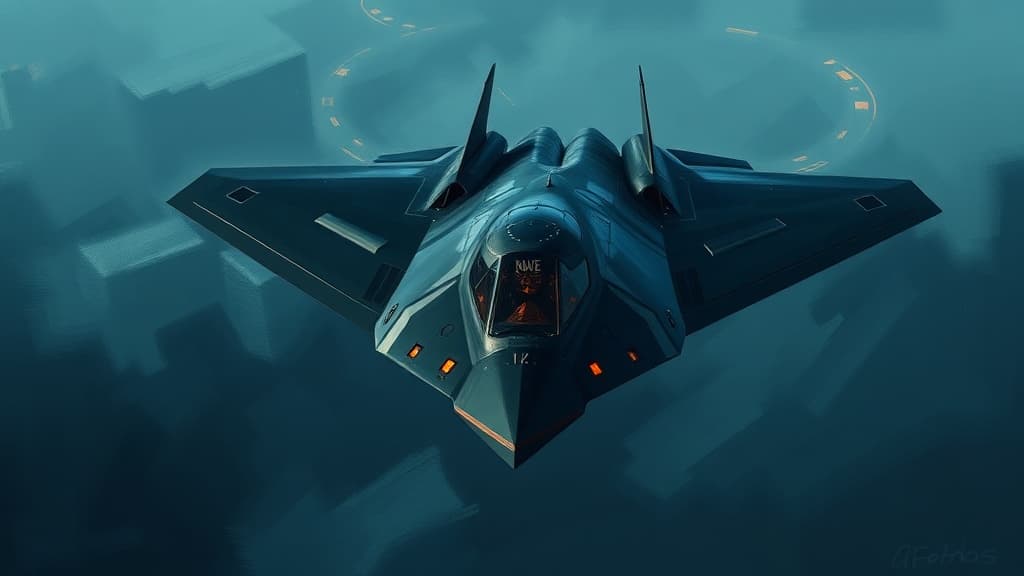
Northrop's Tacit Blue program aimed to create a low-observable reconnaissance aircraft, running from 1976 to 1985, with the prototype completing 135 flights. The aircraft utilized curved surfaces for radar deflection and pioneered Low Probability of Intercept (LPI) radar technology.
The project was initially known as 'Pave Mover' and was awarded $136 million. The Whale's radar cross-section was touted as less than that of a bat, a significant achievement in stealth technology. After its flights, the sole aircraft was stored at a secret facility and only acknowledged in 1996, eventually housed in the Air Force National Museum. This program's techniques significantly impacted future military aircraft design.



Comments