
Operation Teardrop: U.S. Navy's Mission to Prevent German Submarine Rocket Attacks on New York City
As World War II drew to a close, the U.S. Navy launched Operation Teardrop to counter the perceived threat of German U-boats armed with V-1 rockets targeting New York City. The operation resulted in the sinking of five German submarines but also led to the loss of the USS Frederick C. Davis, marking the last American warship sunk in the Atlantic with 126 casualties. Subsequent analysis revealed that the intelligence regarding Germany's rocket capabilities was unreliable, underscoring the significance of naval operations and signals intelligence during the war.
 Theia Market Signal Identification - AI Assisted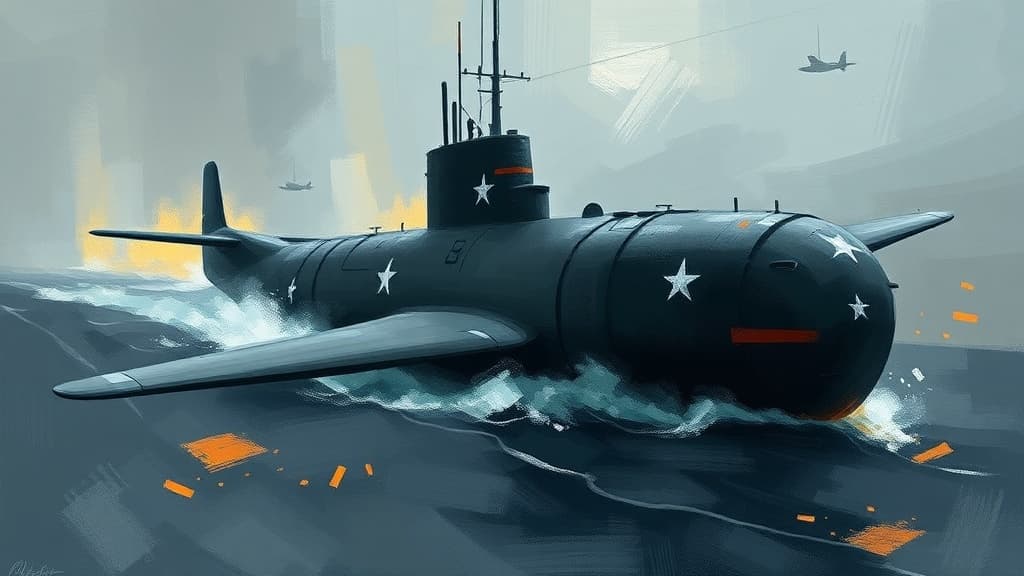
As World War II neared its end, U.S. Navy intelligence feared German U-boats were poised to attack New York City with V-1 rockets, prompting the launch of Operation Teardrop. The Navy sank five German submarines in the North Atlantic, thwarting what they believed was an imminent missile threat.
Despite the success, the operation resulted in the sinking of the USS Frederick C. Davis, the last American warship lost in the Atlantic, with 126 casualties. Intelligence from captured spies indicated that Germany was equipping submarines with V-1 rockets, leading to heightened fears and mobilization of naval forces.
In April 1945, U-546 attacked and sank the Frederick C. Davis, but was subsequently destroyed by American escorts. Post-war analysis revealed Germany's rocket program had not advanced to operational status, and the captured spies' information was unreliable. Operation Teardrop effectively demonstrated American naval capabilities and the importance of signals intelligence.




Comments