
Pandora Space Telescope Launched to Assist James Webb in Exoplanet Atmosphere Analysis
The Pandora space telescope was successfully launched on January 11, 2026, to support the James Webb Space Telescope in analyzing exoplanet atmospheres using a transit method. By observing target stars in visible and infrared wavelengths for up to 200 hours per star, Pandora aims to enhance the accuracy of Webb's findings by isolating stellar noise. Currently orbiting Earth every 90 minutes, Pandora will soon transition control to the Multi-Mission Operation Center in Tucson.
 Theia Market Signal Identification - AI Assisted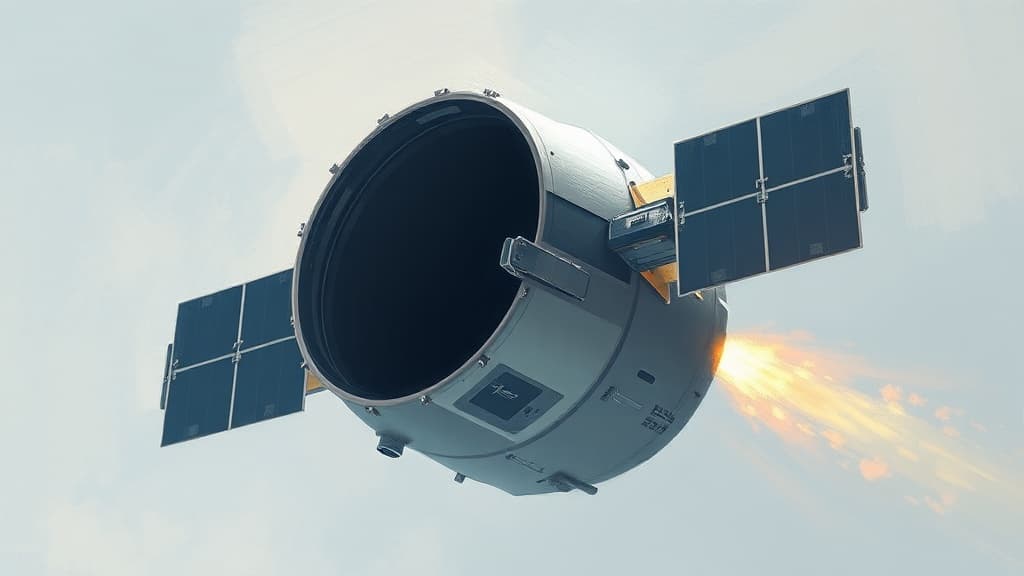
The Pandora space telescope was launched on January 11, 2026, aboard a Falcon 9 rocket from Vandenberg Space Force Base in California. It will assist the James Webb Space Telescope by analyzing exoplanet atmospheres through a transit method, where light from a star passes through a planet's atmosphere, revealing components such as water vapor and hydrogen.
The Pandora, smaller than Webb, will observe target stars in visible and infrared wavelengths for 24 hours, returning to the same systems up to ten times a year, collecting over 200 hours of observation per star. This data will help isolate stellar noise from the Webb's findings. Currently, Pandora orbits Earth approximately every 90 minutes, with systems tested by Blue Canyon Technologies before control is transferred to the Multi-Mission Operation Center in Tucson in about a week.



Comments