
RACER Program Advances Autonomous Robotics for Military and Civilian Applications
The RACER program, in partnership with the U.S. Army and Marine Corps, is advancing autonomous robotics for both military and civilian use, featuring enhancements such as the 1X World Model update for improved robot learning. Notable developments include a robotic system for volcanic gas monitoring, a humanoid robot for industrial logistics, and innovations in assistive technologies for the visually impaired. Additionally, DEEP Robotics showcased coordinated firefighting operations with quadruped robots, highlighting the program's diverse applications in enhancing safety and efficiency.
 Theia Market Signal Identification - AI Assisted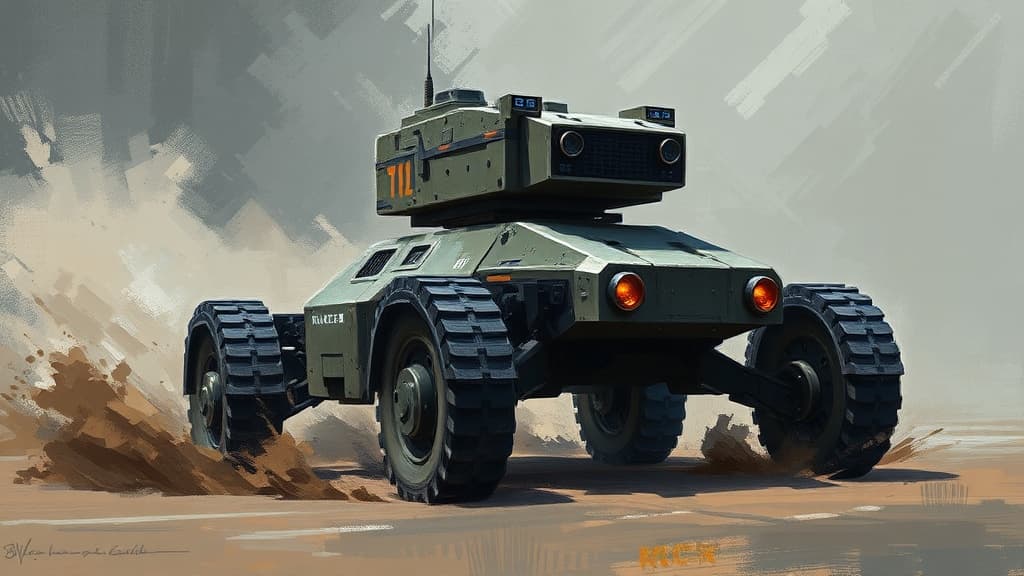
The RACER program, in collaboration with U.S. Army and Marine Corps, is nearing completion, leaving a legacy of autonomous capabilities for military operations. The 1X World Model update enhances robot learning, enabling NEO to perform novel tasks autonomously.
The GuideData Dataset aims to improve assistive technologies for visually impaired individuals. An autonomous robotic system has been developed for volcanic gas monitoring, validated on Mount Etna. Humanoid completed POC testing with Siemens for industrial logistics.
Four Growers' GR-200 harvesting platform utilizes FANUC's LR Mate robot for efficient tomato harvesting. Columbia Engineers created a robot that learns facial lip motions for speech and singing. DEEP Robotics demonstrated coordinated firefighting operations with quadruped robots.
Synapticon introduced the POSITRON platform for humanoid robot safety. Ken Goldberg from UC Berkeley discusses advancements in AI and robotics.

Comments