
Repurposing Hydraulic Fracturing Sites for Geothermal Heating: A Strategic Shift in the UK's Energy Landscape
The UK's transition from fossil fuels is paving the way for repurposing hydraulic fracturing sites as geothermal heat sources. The Kirby Misperton site in North Yorkshire is the first to convert a fracking well for geothermal production, demonstrating potential for local heating applications. With around 680 oil and gas wells identified for conversion, leveraging existing infrastructure can enhance project economics. Government funding and supportive policies are crucial for overcoming regulatory challenges, while community acceptance and environmental benefits further bolster the case for geothermal energy.
 Theia Market Signal Identification - AI Assisted
As the United Kingdom accelerates its shift from fossil fuels, a promising avenue emerges: the transformation of former hydraulic fracturing sites into geothermal heat sources. Once a source of public contention, these deep wells, originally drilled for oil and gas extraction, are now being scrutinized for their potential to access underground heat reserves. This innovative approach could herald a new era of renewable heating systems, with initial projects providing vital insights into both technical feasibility and commercial viability.
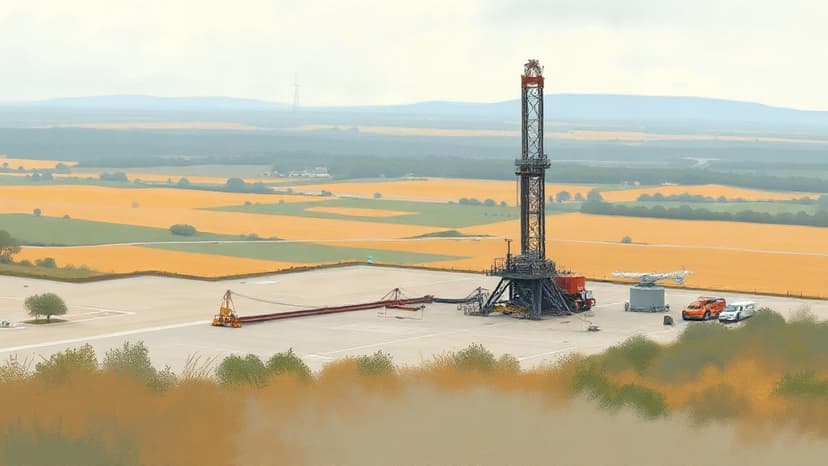
The Kirby Misperton site in North Yorkshire marks a significant milestone as the UK's first operational conversion of a hydraulic fracturing well to geothermal heat production. Previously managed by Third Energy for fracking, this site has been repurposed by Ceraphi Energy to harness geothermal energy from the earth's depths. Initial assessments indicate that the converted well, extending three kilometers underground, could supply heat for local applications by circulating water that absorbs heat from surrounding rock formations before returning it to the surface.
In a comprehensive study published in the journal Energies, researchers evaluated 2,242 onshore hydrocarbon wells and identified 560 with potential for geothermal repurposing, including 292 currently operational. Ceraphi Energy's findings suggest that approximately 680 oil and gas wells could be converted, with concentrations exceeding 200 wells located between Lincolnshire and the Northeast.
The economic appeal of converting these wells lies in the ability to utilize existing infrastructure, circumventing the substantial costs associated with new geothermal projects. According to government data, the typical geothermal heat project can cost between £2 million to £4 million per megawatt thermal hour (MWth) of capacity, with drilling being the most significant expense. By repurposing existing wells, the primary cost barrier is eliminated, improving the overall project economics.
However, the successful conversion of oil and gas wells into geothermal heat projects hinges on several factors. Wells must reach adequate depths—typically between 2 to 3 kilometers—to access viable temperatures, a requirement met by many former oil and gas sites.
Nonetheless, tailored modifications to existing equipment are necessary, as geothermal operations differ significantly from conventional oil and gas systems. Regulatory frameworks add another level of complexity, necessitating policy adaptations that allow for more flexibility between halting hydrocarbon production and abandoning wells.
The UK government has initiated several funding mechanisms to support geothermal heat development. Notable initiatives include a £22 million award to the Langarth Deep Geothermal Heat Network Project in 2023 and the Green Heat Network Fund, which allocates £288 million for heat network projects through 2025.
Research suggests that geothermal heating projects could yield substantial carbon dioxide savings, potentially reaching 2,400 tons annually compared to gas heating systems. Furthermore, the establishment of the UK's first national center for geothermal energy in 2024 signals a commitment to advancing this sector.
District heating networks represent the primary market application for geothermal heat sources, allowing for efficient heat distribution to multiple buildings, thereby enhancing project economics through scale. While operational costs must be considered, geothermal heat sources provide consistent output that complements intermittent renewable electricity generation, such as wind and solar, supporting grid stability and reducing reliance on imported gas.
Crucially, repurposing these wells also addresses environmental concerns surrounding abandoned infrastructure and promotes productive land use. Transitioning sites like Kirby Misperton from contentious fossil fuel operations to renewable energy applications may bolster community acceptance and create local employment opportunities in regions previously dependent on oil and gas.
To foster broader sector development, several enablers must be established. Regulatory modifications are essential to extend timelines between hydrocarbon production cessation and well abandonment. Enhanced funding for research and development could further optimize well performance and enhance temperature capabilities.
Additionally, integrating geothermal projects with district heating network expansion is vital for scaling up. The government’s commitment of over £288 million to heat network development will provide the necessary infrastructure for wider geothermal deployment.
Long-term operational data from projects like Kirby Misperton will be instrumental in informing economic modeling for future conversions. As the industry navigates both technical challenges and regulatory hurdles, the potential for repurposing former fracking wells for geothermal heat production stands as a viable pathway to expand the UK’s renewable heat capacity. Continued government support, regulatory adaptation, and demonstrable commercial viability through operational projects will be pivotal in meeting the UK's heating decarbonization requirements while capitalizing on existing subsurface infrastructure.



Comments