
Rhode Island's Trade with France During the Seven Years' War
During the Seven Years' War, Rhode Island violated British trade embargoes, becoming a crucial supplier to French Canada despite official orders to cease exports. The practice of routing goods through neutral ports, particularly Monte Cristi, frustrated British authorities and led to the ousting of Governor Stephen Hopkins. By 1761, the war had significantly disrupted trade across American ports, with influential merchants in New York and Pennsylvania benefiting from government contracts.
 Theia Market Signal Identification - AI Assisted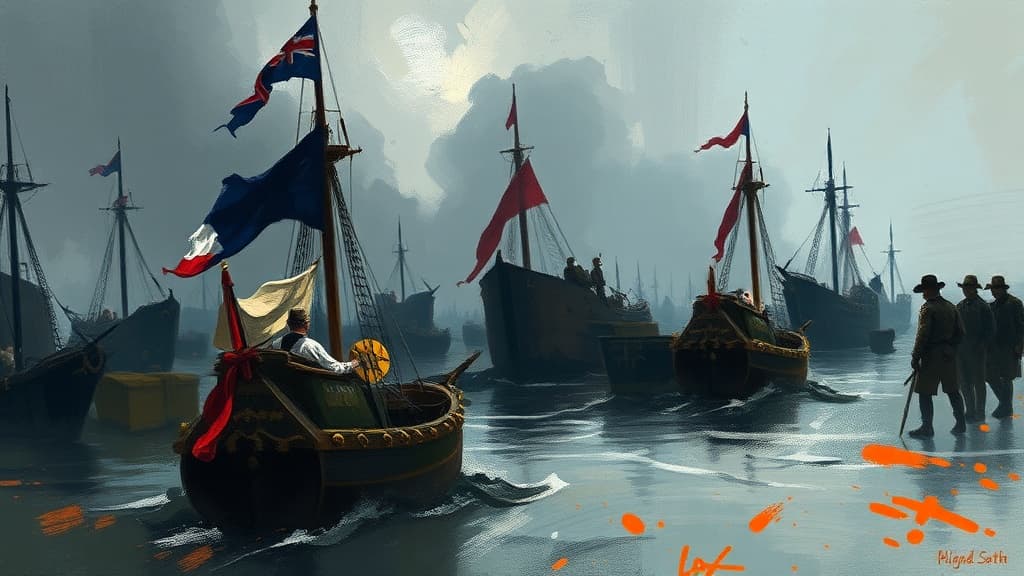
Rhode Island defied the British embargo against trade with France during the Seven Years' War, becoming a key supplier to French Canada. Governor Stephen Hopkins was ousted due to public discontent over his involvement in the conflict.
Despite British orders to halt exports and disrupt trade, Rhode Island shippers employed flags of truce and routed their goods through neutral ports, particularly Monte Cristi in Hispaniola. This practice frustrated British authorities, and certain colonial governors profited from the sale of flags-of-truce privileges.
The peak of this illicit trade occurred in 1759, before the Royal Navy intervened in 1760 to suppress it. Additionally, influential merchants in New York and Pennsylvania benefitted from government war contracts, with firms like John Thomlinson and John Hanbury securing significant contracts and designating local representatives. By 1761, the war severely disrupted trade across American ports.




Comments