
Steel Industry's Shift Towards Decarbonization: Key Developments and Challenges
The steel sector must innovate to cut carbon emissions significantly, with an estimated $1.4 trillion required by 2050 for net zero. Major players like Tata Group and ArcelorMittal are exploring electric arc furnaces and hydrogen technologies to reduce their carbon footprints.
 Theia Market Signal Identification - AI Assisted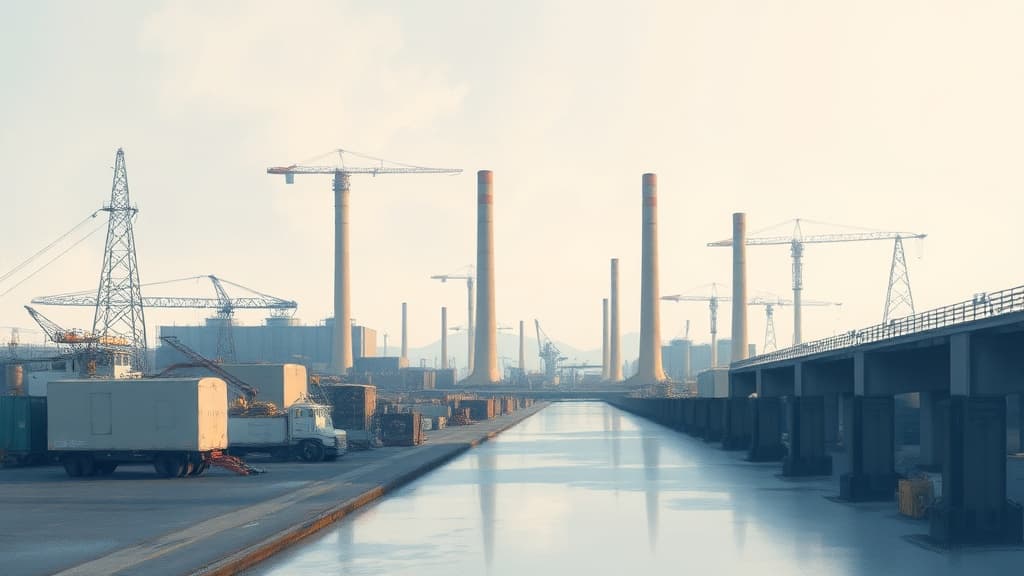
The steel industry accounts for 7-9% of global CO2 emissions, necessitating significant changes to meet climate targets. Port Talbot, the UK's largest steelworks, is under pressure to evolve due to its status as the top carbon emitter in Britain.
Analysts project that $1.4 trillion will be required to decarbonize the sector by 2050. Companies are investigating electric arc furnaces and hydrogen to eliminate emissions. In Belgium, ArcelorMittal is producing biocoal from waste wood, reducing emissions by about 5%.
The industry is also implementing carbon capture technologies, with some firms planning direct reduction plants using natural gas or hydrogen. However, challenges remain, including job concerns and the need for standardization in green steel production. Governments are increasingly involved, providing financial support to help transition to greener practices.


Comments