
UC Irvine Discovers Largest Stream of Superheated Gas Ejecting from Galaxy VV 340a
Astronomers from UC Irvine have discovered the largest-known stream of superheated gas from the nearby galaxy VV 340a, utilizing data from NASA's James Webb Space Telescope. This gas, generated by an active supermassive black hole, forms two elongated nebulae and exceeds typical gas confinement by a factor of 30, impacting star formation by stripping the galaxy of gas. The findings suggest further investigation of similar phenomena in other galaxies, with support from NASA and the National Science Foundation.
 Theia Market Signal Identification - AI Assisted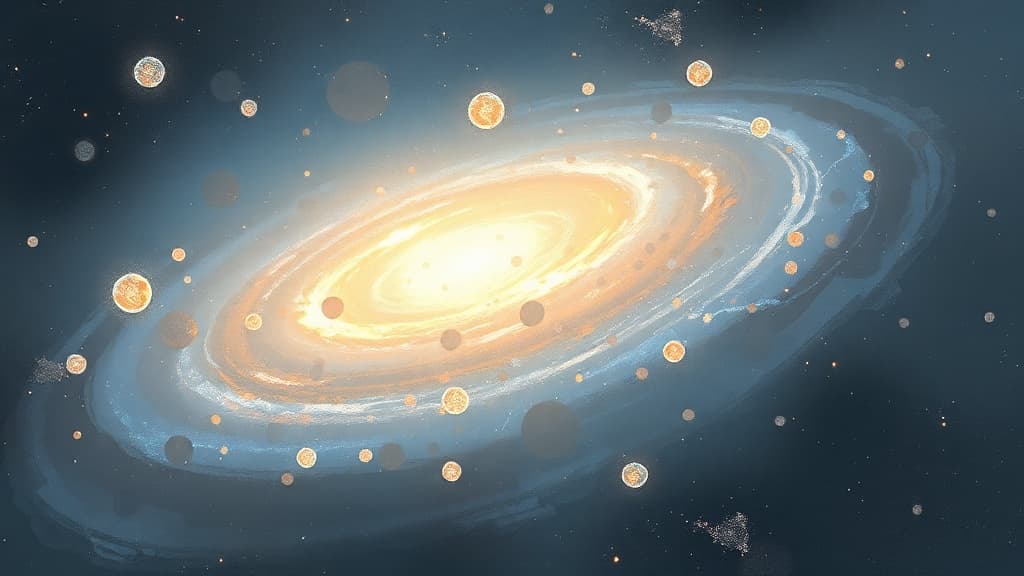
Astronomers from UC Irvine have identified the largest-known stream of superheated gas in the universe emanating from the nearby galaxy VV 340a. Detected using NASA's James Webb Space Telescope, the gas forms two elongated nebulae, each over three kiloparsecs long, resulting from an active supermassive black hole at the galaxy's center.
This discovery exceeds typical gas confinement near black holes by a factor of 30. The team utilized data from the Karl G. Jansky Very Large Array and the Keck II Telescope, revealing a helical pattern from large-scale plasma jets.
The jets' kinetic energy is equivalent to 10 quintillion hydrogen bombs per second, significantly impacting star formation in VV 340a by stripping it of gas. The study suggests further exploration of other galaxies to observe similar phenomena. Funding was provided by NASA and the National Science Foundation.



Comments