
UK Consortium Secures Funding to Develop Floating Hydrogen Power Hubs for Port Decarbonization
Elire Infra and its consortium partners have received £1 million in UK government funding to explore floating hydrogen power hubs aimed at decarbonizing port operations. The project, running until March 2026, seeks to determine the technical and commercial viability of hydrogen-powered microgrids. If successful, it could lead to the UK's first operational hydrogen hub by 2028, potentially reducing CO2 emissions by 500,000 tonnes globally over the next decade while promoting job creation and advancing the hydrogen supply chain.
 Theia Market Signal Identification - AI Assisted
Elire Infra, backed by a consortium of partners, has embarked on an ambitious project to develop floating hydrogen power hubs, securing £1 million in funding from the UK government. This initiative, part of the Clean Maritime Demonstration Competition Round 6, aims to explore the feasibility of these innovative microgrids designed to decarbonize port operations. Running until March 2026, the project will assess the technical and commercial viability of hydrogen-powered systems that could revolutionize the way ports generate and utilize energy.
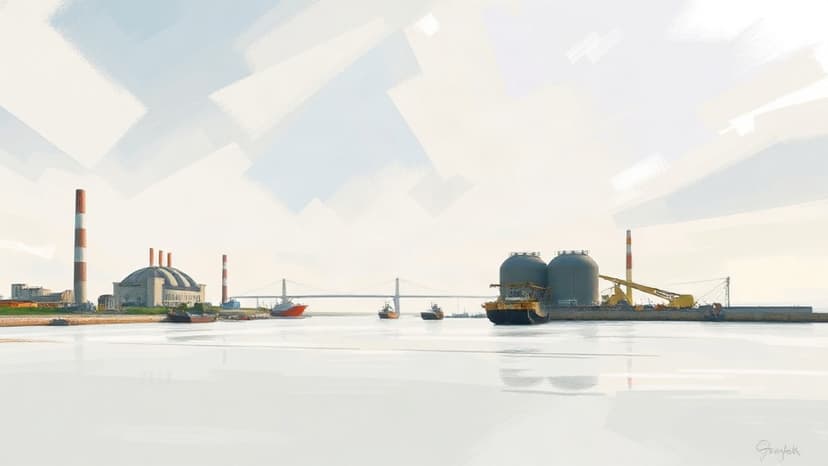
The floating hydrogen power hubs are envisioned to deliver up to 5 MW of clean energy to vessels, effectively replacing or supplementing the reliance on fossil fuels in port energy systems. Their modular design allows for deployment in various locations, from bustling urban harbors to remote coastal areas, making them versatile solutions for energy generation in constrained spaces. Luke Jenkinson, founder of Elire Infra, emphasizes the power density of hydrogen, which far surpasses that of traditional industrial batteries, allowing for cleaner and more efficient energy systems.
Project lead Chris Carlisle highlights that the floating hydrogen power hub represents not merely a technological advancement but a transformative energy model for port operations. Beyond the potential for significant emissions reductions—estimated to be as high as 500,000 tonnes of CO2 over the next decade—this project is poised to create jobs, bolster the hydrogen supply chain, and position the UK as a leader in maritime decarbonization.
The feasibility study will include comprehensive assessments of on-site hydrogen production and storage strategies, ensuring each hub functions as a self-sufficient node within a broader hydrogen infrastructure. Collaborations with Schneider Electric and Ricardo UK are set to yield an integrated control architecture that balances power flows, while the University of Strathclyde conducts essential tests on hydrodynamics to guarantee stability in turbulent waters.
The project is not merely a one-off trial but aims to lay a blueprint for ports across the UK and beyond. By embracing this technology, ports could not only slash diesel consumption significantly but also contribute to cleaner air for surrounding communities and foster fresh employment opportunities in engineering and operations.
However, challenges remain, including navigating complex maritime hydrogen regulations and securing investor confidence amidst fierce global competition in clean maritime technology. Nevertheless, as Elire and its partners chart this innovative course, they are not just envisioning a future of sustainable energy at sea; they are actively working to turn that vision into reality. If successful, these floating hydrogen power hubs could transform UK ports from traditional diesel-dependent operations into leading examples of zero-emission innovation.


Comments