
US hydrogen projects at risk as tax credit window narrows
A majority of American green hydrogen projects could stall as a crucial federal tax credit's window narrows, pressuring developers to break ground years sooner than planned. Policy shifts in Washington have turned what was a decade-long runway into a race against time, raising doubts about which ambitious plans will survive.
 Theia Market Signal Identification - AI Assisted
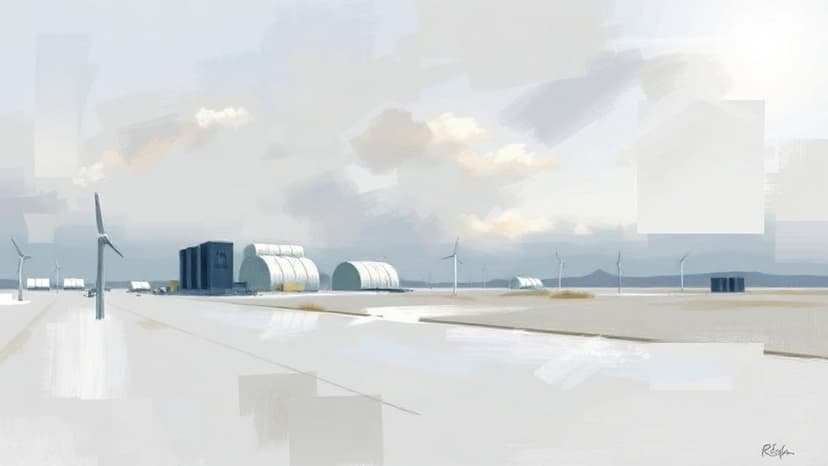
In the deserts of the American Southwest, plans for gleaming new hydrogen plants are colliding with an inconvenient deadline. A recent analysis by Wood Mackenzie warns that over 75% of U.S. green hydrogen projects in development will likely miss the cutoff to qualify for the federal production tax credit[1].
The culprit is a political about-face: President Trump's administration, via its "One Big Beautiful Bill" enacted in July, moved up the expiration of the hydrogen tax credit to January 1, 2028 – a full six years earlier than originally scheduled[2]. Only a handful of projects are far enough along to begin construction by the end of 2027, the new deadline set for the Section 45V credit[1][2].
The accelerated timeline has sown uncertainty. Green hydrogen developers had counted on a longer runway to build electrolyzers and renewable power capacity. Now, projects that looked feasible on paper are scrambling.
"The lack of certainty and a step back in green ambition has stopped the emerging green energy markets," lamented one industry executive. In Massena, New York, industrial gas giant Air Products canceled a planned 35-ton-per-day green hydrogen plant after a regulatory tweak rendered its hydroelectric power supply ineligible for the credit[3].
In Mississippi, startup Hy Stor Energy quietly shelved an order for over 1 GW of electrolyzers from Norway's Nel ASA, citing shifting economics[4]. These examples underscore a broader trend: without the tax credit cushion, many ventures suddenly appear unviable.
The policy whiplash stems from Washington's changing priorities. The Inflation Reduction Act of 2022 had promised a decade of support for "clean hydrogen," spurring a gold rush of project announcements.
But the 2025 legislation – H.R.1, dubbed the "Big Beautiful Bill" – pared back or repealed many green subsidies. For hydrogen, it means projects must be up and running by 2028 to reap the full benefit[2].
This dramatically compresses development timelines for multibillion-dollar efforts that were, in several cases, barely beyond the feasibility stage. Even with final IRS rules clarifying eligibility (released in early 2025), the shortened horizon has dampened investor confidence.
Paradoxically, the squeeze on green hydrogen may boost "blue" hydrogen derived from natural gas with carbon capture. Analysts note that blue hydrogen projects, often tied to existing gas infrastructure, can potentially come online faster and now look "significantly more bankable" under the new timeline[2].
Meanwhile, state-level support becomes more pivotal: regions like California and New York might step in with their own incentives to salvage projects in their clean energy plans. For now, America's hydrogen hopefuls face a race against the clock.
Companies that can accelerate construction – lining up permits, equipment and financing in record time – may still squeeze in before the door closes. Others are pleading with Congress for a deadline extension or alternative support.
As the policy pendulum swings, the U.S. hydrogen industry's grand ambitions hang in the balance, awaiting either a last-minute reprieve or a reckoning in the form of delayed or abandoned projects[3][4]. The coming year will determine whether America's clean hydrogen boom can survive the sudden policy bust.


Comments