
Brazil and Belgium Launch Green Shipping Corridor for E-Fuel Exports by 2030
Brazil's Port of Açu has partnered with Belgium's Port of Antwerp-Bruges to create a green shipping corridor aimed at establishing a large-scale e-fuel export route by 2030. Despite the current high production costs of e-fuels, advancements in technology and significant investments from the European Commission are expected to drive progress in sustainable fuel production. The initiative highlights the ongoing challenges in scaling e-fuels, particularly the need for reduced hydrogen production costs.
 Theia Market Signal Identification - AI Assisted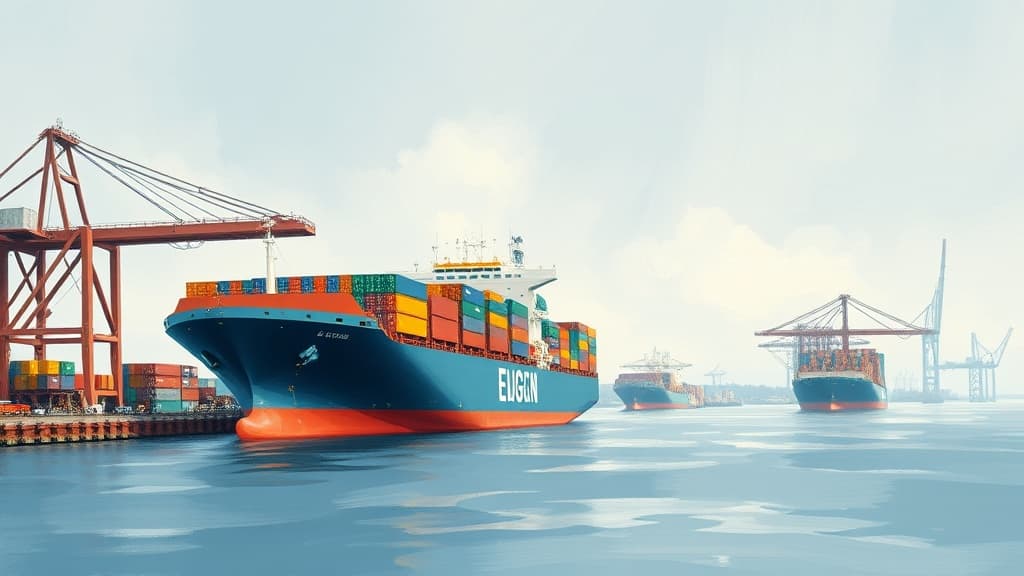
The Port of Açu in Brazil has initiated a green shipping corridor with the Port of Antwerp-Bruges in Belgium, aiming to establish one of the first large-scale e-fuel export routes by 2030. E-fuels production remains costlier than fossil fuels, primarily due to renewable electricity costs, but demonstration facilities like the HIF Haru Oni in Chile have shown technical viability.
The facility has been producing green hydrogen and synthesizing it with recycled CO₂ into e-methanol and e-gasoline. Recent innovations in electrolyser standardization and modular construction promise cost reductions.
The European Commission has announced a €2.9 billion investment for sustainable fuels by 2027. A partnership between Denmark's Topsoe and the UK’s Carbon Neutral Fuels aims to advance eSAF technology. The challenges to scaling e-fuels include high production costs, with hydrogen needing to be below $1.50 per kg to be economical.


Comments