
India Doubles PM-KUSUM Budget to Boost AgriPV for Solar Power and Farming Synergy
The Indian government increased the PM-KUSUM scheme budget to Rs 5,000 crore for 2026-27, aiming to enhance solar energy production for farmers. Agri-photovoltaics (agriPV) is proposed as a solution to integrate solar power generation with agricultural practices without compromising food security. Various agriPV designs can optimize crop yield and energy production based on local conditions. The initiative could support India's solar capacity goals and improve farmer incomes while providing environmental benefits.
 Theia Market Signal Identification - AI Assisted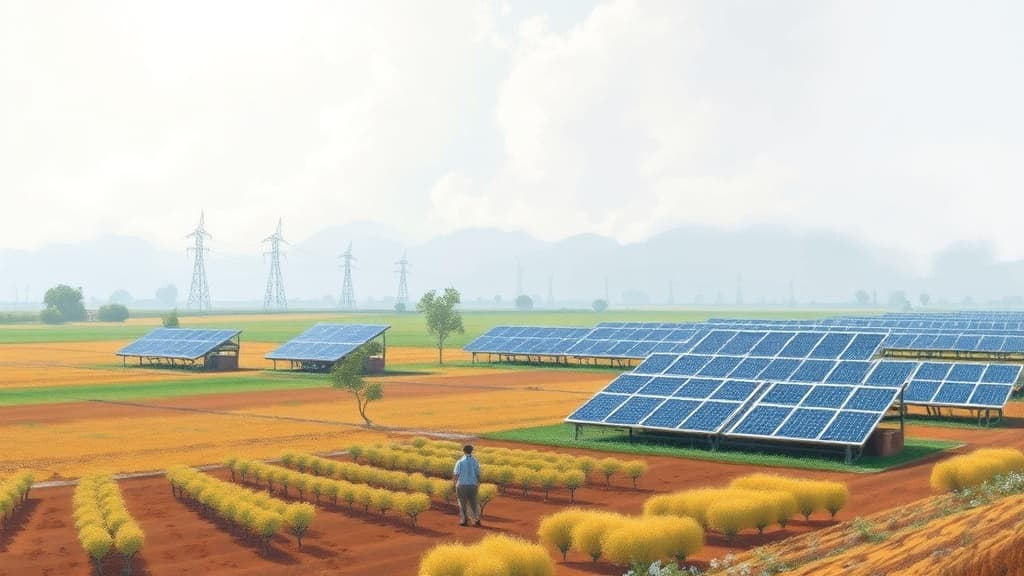
The Indian government allocated Rs 5,000 crore for the PM-KUSUM scheme in 2026-27 to enhance solar power for farmers. Agri-photovoltaics (agriPV) integrates solar energy systems with farming, allowing simultaneous electricity generation and crop cultivation.
Designs vary by crop and region, emphasizing systematic planning and careful crop selection. Business models for agriPV include farmer ownership, land leasing, and cooperative projects. With India targeting 300 GW of solar capacity by 2030, agriPV could alleviate land-use conflicts.
Approximately 50 pilot installations are ongoing, but large-scale adoption faces economic and regulatory challenges. Proposed policy support may establish a 'National Agri-photovoltaics Mission' under PM-KUSUM 2.0, enhancing project viability and farmer-centric solarisation.


Comments