
Libya's Great Man-Made River: A 4,000km Water Supply Project Faces Sustainability Challenges
The Great Man-Made River, initiated in the 1980s, is a critical infrastructure project supplying fossil water to Libya's cities. However, sustainability concerns emerge as the finite aquifer could be depleted in 60-100 years under current usage.
 Theia Market Signal Identification - AI Assisted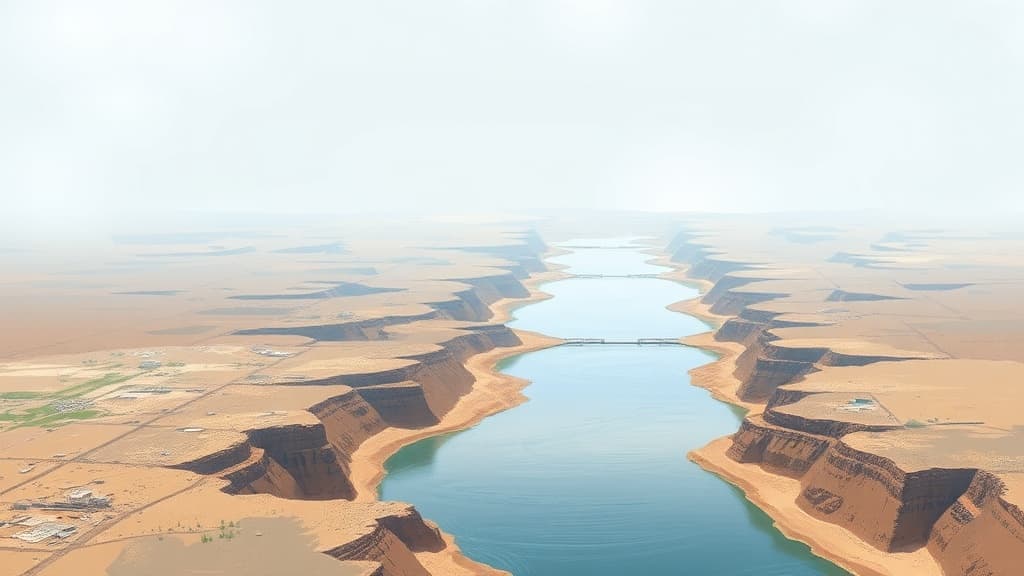
The Great Man-Made River is an extensive irrigation project in Libya, consisting of over 4,000 km of underground pipelines that transport water from the Nubian Sandstone Aquifer to northern urban areas. Launched in 1984, it cost over 25 billion USD and was funded solely by oil revenues.
This project has significantly impacted Libya's agriculture and water supply, enabling crop production in previously arid regions. However, the fossil water source is non-renewable, raising concerns about its longevity.
Damage during the Second Libyan Civil War disrupted operations, highlighting the need for ongoing maintenance. The reliance on gravity for water flow enhances energy efficiency compared to desalination methods. Long-term sustainability remains a critical issue for the project.

Comments