
New Chemical MPPT System Enhances Solar Fuel Production Efficiency
The integration of a chemical maximum power point tracking (MPPT) system into an electrolyzer enables stable solar fuel production without the need for batteries. This innovation could significantly reduce costs and complexity in solar energy systems, making them more viable for sustainable energy solutions.
 Theia Market Signal Identification - AI Assisted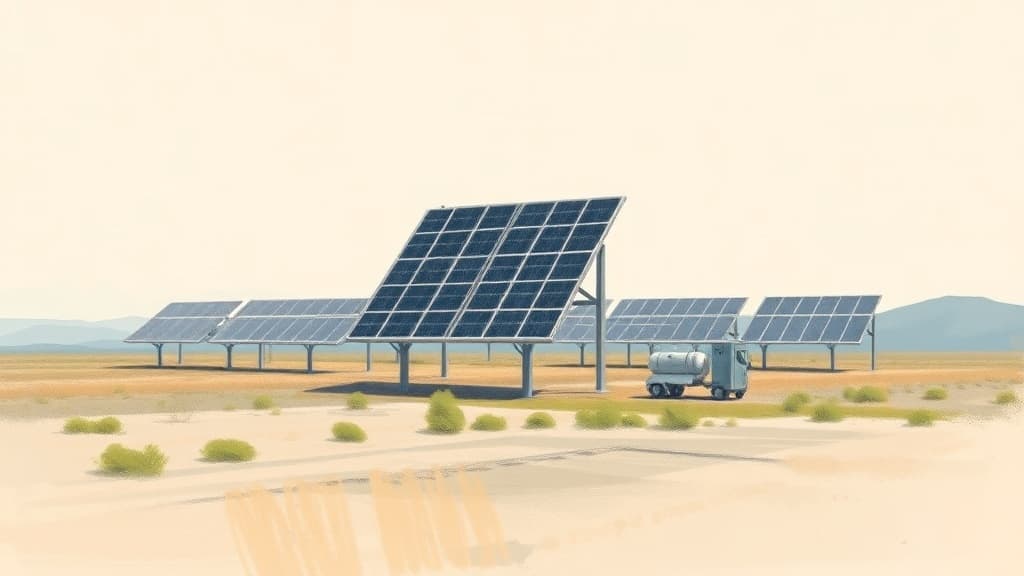
A novel chemical MPPT system incorporated directly into an electrolyzer has been developed, facilitating unmanned liquid solar-fuel production without conventional electronic components. The system operates by using CO2 and water, achieving an external solar-to-formic-acid efficiency of approximately 2% and stabilizing formic acid production at about 3 wt% concentration under varying solar irradiance in Osaka, Japan.
The electrolyzer's three-compartment design utilizes a solid-state electrolyte with a negative temperature coefficient, allowing for real-time adjustments in flow rates to regulate thermal dissipation and maintain optimal operating conditions. This method simplifies the system by eliminating the need for batteries and DC-DC converters, notably improving operational reliability and efficiency. Future advancements may focus on increasing durability and scalability, enhancing the potential for cost-effective solar-to-fuel conversions.



Comments