
Saudi Arabia Researchers Propose Pathway to Net-Zero Emissions by 2060 with 151 GW Solar Capacity
Saudi Arabia's King Abdullah Petroleum Studies and Research Center researchers outlined a pathway to achieve net-zero emissions by 2060. The plan includes 515.3 GW of renewable capacity, primarily from onshore wind, and 151.3 GW of solar PV, requiring about 3.6% of land, predominantly in the northeastern region. The study evaluates two scenarios: zero-emission power and net-zero emissions power, emphasizing the need for careful resource management and strategic technology selection to address challenges in critical minerals.
 Theia Market Signal Identification - AI Assisted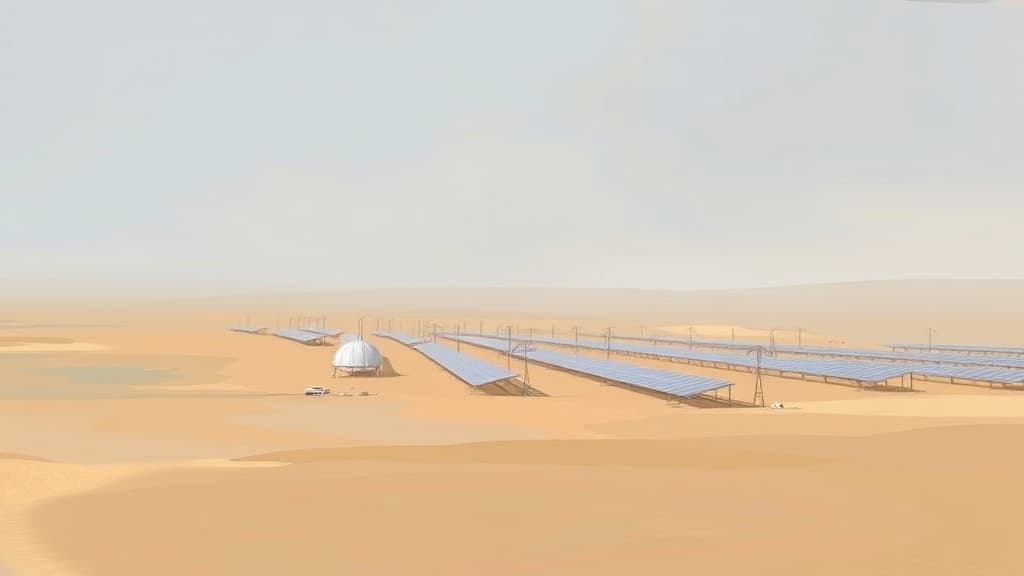
Researchers from Saudi Arabia's King Abdullah Petroleum Studies and Research Center (KAPSARC) proposed a pathway for the kingdom to achieve net-zero emissions by 2060, requiring 3.6% of land for renewable energy development. This includes 515.3 GW of total capacity, with onshore wind dominating.
Solar PV is projected to reach 151.3 GW, occupying 3,519 km2, or 0.16% of Saudi land. The study assesses scenarios of zero-emission and net-zero emissions power, highlighting challenges related to critical minerals and emphasizing the need for efficient technology selection and resource management. The findings stress a holistic approach to decarbonization in the power sector.

Comments