
Singapore Advances Nuclear Energy Plans with Bilateral Agreements and SMR Development
Singapore has signed civil nuclear cooperation agreements with the US, Japan, and South Korea, marking a significant shift towards nuclear energy. The government is evaluating small modular reactors (SMRs) and has committed substantial funding to nuclear development. However, concerns arise regarding energy demand planning for a growing population, particularly in light of increasing data centre energy consumption. The issue of nuclear waste management poses a unique challenge for Singapore due to its geographic constraints. The government's approach has not fully engaged public opinion or addressed long-term commitments to nuclear energy.
 Theia Market Signal Identification - AI Assisted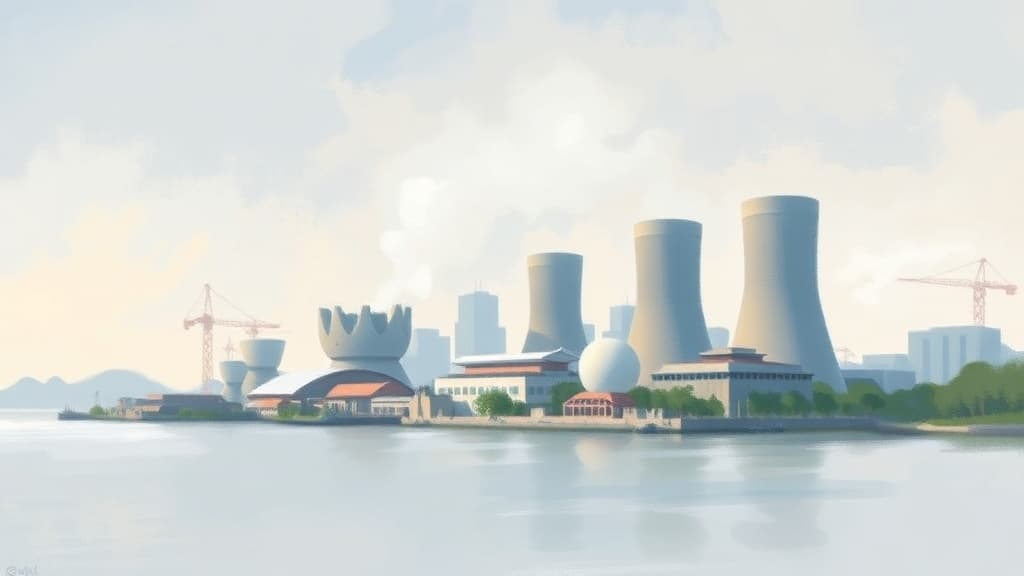
On March 15, 2026, Singapore's Minister Tan See Leng announced a serious study of small modular reactors (SMRs) at an energy security forum in Tokyo, coinciding with a bilateral civil nuclear cooperation agreement with Japan. Singapore has similar agreements with the United States and South Korea, signaling a transition from study to active program development.
Despite past statements deeming nuclear technologies unsuitable, recent actions indicate a strong governmental push towards nuclear energy, with significant funding allocated to the Future Energy Fund and a growing talent pool in nuclear expertise. The demand for nuclear power is driven by expanding data centres, projected to consume 12% of the total electricity by 2030.
However, the government has not disclosed a clear population growth plan or sufficiently addressed the implications of nuclear waste management, which poses unique risks in a densely populated city-state. Public sentiment regarding nuclear energy remains largely negative, raising questions about societal consent for such long-term commitments.


Comments