
Container Shipping Evolution: From Ideal X to ULCVs
Container shipping has revolutionized global trade, with 90% of non-bulk cargo transported in standardized containers. The industry faces significant changes towards sustainable fuels to meet the IMO's net-zero emissions target by 2050.
 Theia Market Signal Identification - AI Assisted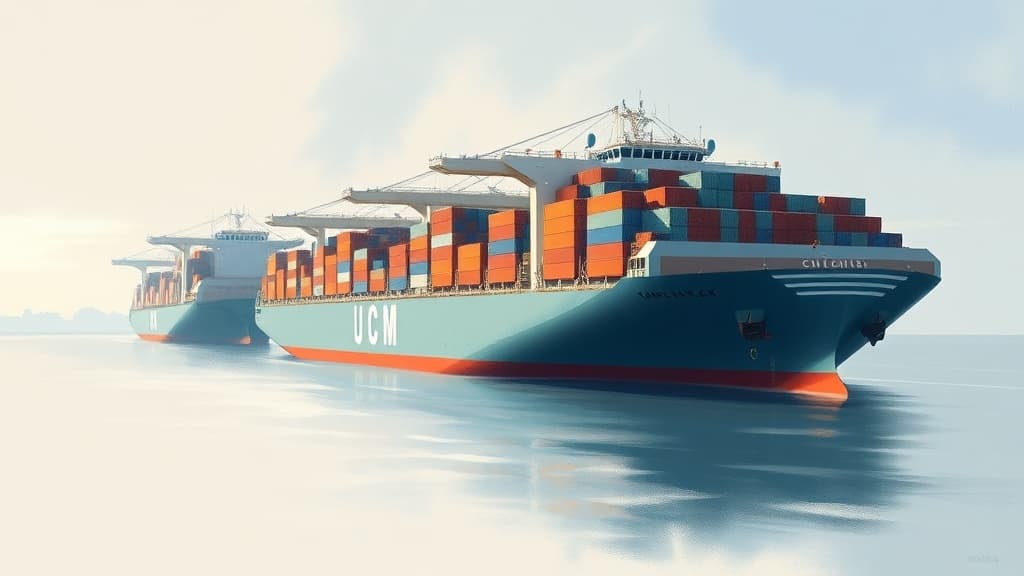
The container shipping industry transports 90% of the world's non-bulk cargo, valued at approximately $14 trillion annually. As of 2023, the MSC Irina is the largest container ship with a capacity of 24,346 TEU.
Container ships are classified based on cargo handling and size, with Panamax, Post-Panamax, Neo-Panamax, and ULCVs being key categories. The introduction of standard ISO containers and intermodal transport has drastically reduced shipping costs.
However, the industry faces challenges, including the need for greener fuels and the risks of container losses at sea. Automation and AI are enhancing terminal efficiency, while debates continue on the feasibility of larger vessels beyond 25,000 TEU.




Comments