
On-site Battery Systems Enhance Data Center Grid Connections in the US
Battery energy storage systems (BESS) are increasingly adopted by data center developers in the US to expedite grid connections and provide reliable power. The use of 'bring your own capacity' (BYOC) and flexible grid connections (FGC) enables developers to secure necessary energy storage while minimizing wait times for grid access. Studies show that combining these approaches can reduce connection wait times by three to five years. Utilities like Portland General Electric are already implementing such strategies, with BESS playing a pivotal role in meeting the rising demands of data centers.
 Theia Market Signal Identification - AI Assisted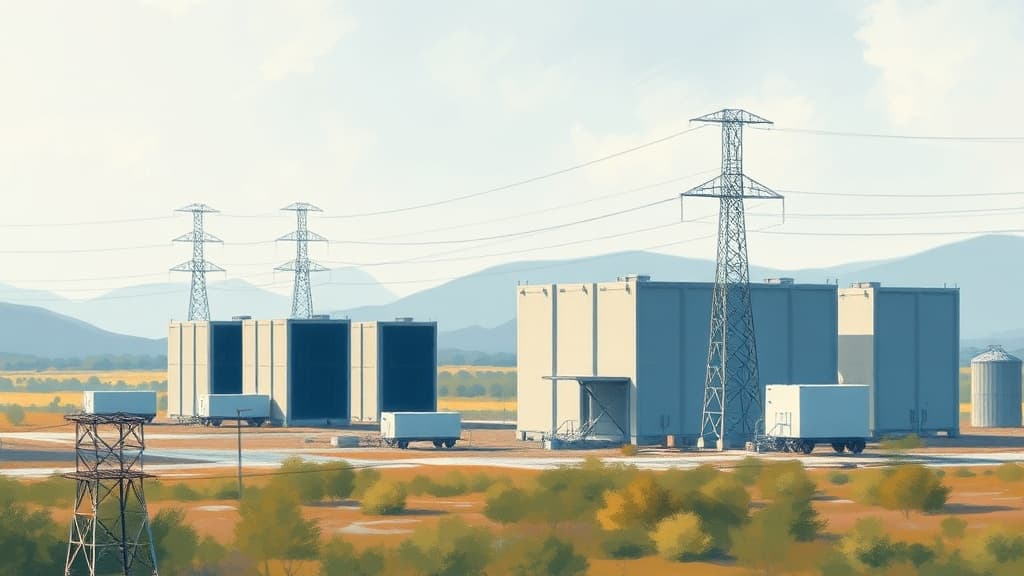
Battery energy storage systems (BESS) are becoming essential for US data center developers to accelerate grid connections, which can take significantly longer than construction timelines. The 'bring your own capacity' (BYOC) trend allows developers to directly procure energy storage to meet service requirements.
Flexible grid connections (FGC) provide a compromise between utilities and developers, allowing for increased capacity use during peak times. Research indicates that combining BYOC with FGC can shorten grid connection wait times by three to five years.
Utilities like Portland General Electric are leveraging this strategy to enhance service delivery. The methodology applied in studies provides a framework for utilities to adopt flexible interconnection planning. The increasing power demands, especially for AI-focused data centers, will likely keep battery storage as a critical component of future energy strategies.


Comments